Ginseng: Immune System!

Liam Reilly
| 22-04-2026
 · News team
Ginseng has occupied a central place in traditional herbal medicine for centuries, particularly within East Asian therapeutic systems. Today, scientific investigation continues to uncover how this botanical supports immune resilience through complex biochemical interactions.
Derived primarily from species such as Panax ginseng and Panax quinquefolius, ginseng contains a unique class of compounds known as ginsenosides. These bioactive molecules are responsible for many of its physiological effects, especially in strengthening immune defense mechanisms and enhancing the body’s ability to respond to external challenges.
Bioactive Compounds and Their Mechanisms
The immunological influence of ginseng is largely attributed to ginsenosides, which act on multiple signaling pathways. These compounds modulate immune cell activity, particularly influencing macrophages, dendritic cells, and natural killer cells. Each of these plays a critical role in identifying and responding to harmful pathogens.
Struggling to see far? Vision testing helps catch myopia before it worsens!
More than just weight? Smart scales track body data for better health insights daily!
Why do genes matter daily? They shape risks, treatments, and how your body responds!
Can light help wounds heal faster? Laser tech boosts regeneration in new ways!
Hidden tech at work? Active particles rebuild structure from the inside out!
Explore these exciting outdoor activities to get your kids immersed in nature while learning valuable lessons.
Ginsenosides also affect gene expression related to immune signaling. By regulating transcription factors involved in inflammatory responses, ginseng helps maintain a balanced immune reaction. This balance is essential, as both insufficient and excessive immune responses can disrupt physiological stability.
Additionally, polysaccharides found in ginseng contribute to immune enhancement. These complex carbohydrates have been shown to stimulate immune cell proliferation and improve communication between different components of the immune system.
According to researchers Soowon Kang and Hyeyoung Min, ginseng functions as an immunomodulator that stabilizes the immune system's internal balance. Their findings suggest that it significantly bolsters the body's natural defenses against pathogens and various microbial infections.
Enhancement of Immune Cell Function
One of the most studied aspects of ginseng is its ability to enhance the functional capacity of immune cells. Natural killer cells, which are part of the body’s innate defense system, exhibit increased activity following consistent ginseng intake. This improved activity supports faster recognition and elimination of foreign agents.
Macrophages, responsible for engulfing and breaking down harmful substances, also benefit from ginseng’s effects. Research indicates that ginseng can enhance phagocytic activity, allowing these cells to operate more efficiently. Furthermore, ginseng influences cytokine production. Cytokines serve as communication signals between immune cells, coordinating responses to potential threats. Balanced cytokine activity ensures that immune reactions are both effective and controlled.
Anti-Inflammatory and Antioxidant Properties
Chronic inflammation can weaken immune efficiency over time. Ginseng contains compounds that help regulate inflammatory pathways, reducing excessive inflammatory signaling while preserving necessary defense responses. Its antioxidant properties also play a significant role.
Oxidative stress, caused by an imbalance between free radicals and antioxidants, can impair immune function. Ginseng helps neutralize these reactive molecules, protecting cells from damage and supporting long-term immune stability. This dual action—reducing inflammation and combating oxidative stress—positions ginseng as a valuable botanical for maintaining overall immune health.
Adaptogenic Support and Stress Regulation
Ginseng is widely classified as an adaptogen, meaning it supports the body’s ability to adapt to physical and mental stress. Stress is known to influence immune performance by altering hormonal balance and immune signaling pathways. By helping regulate stress responses, ginseng indirectly strengthens immune resilience. It supports stable energy levels and reduces fatigue, both of which are important for maintaining consistent immune activity.
Ginseng— Super Immune Booster
Bottom Line Inc
Clinical Evidence and Research Insights
Modern clinical studies have explored the impact of ginseng on immune markers and overall health outcomes. Some trials suggest that regular consumption may reduce the frequency and severity of common infections, particularly during seasonal changes. Standardized extracts, especially those derived from red ginseng, often demonstrate enhanced potency due to higher concentrations of active compounds.
These preparations undergo processes such as steaming and drying, which alter the chemical composition and improve bioavailability.
Although research continues to evolve, current findings support the role of ginseng as a complementary approach to immune support rather than a standalone solution.
Traditional Use and Modern Applications
Historically, ginseng was regarded as a tonic for vitality and longevity. It was commonly used to restore balance during periods of fatigue or recovery. In contemporary settings, ginseng is available in various forms, including capsules, teas, and extracts. Modern applications often focus on preventive health, where ginseng is incorporated into daily routines to maintain immune readiness. Its versatility allows it to be combined with other nutritional strategies for a comprehensive approach to wellness.
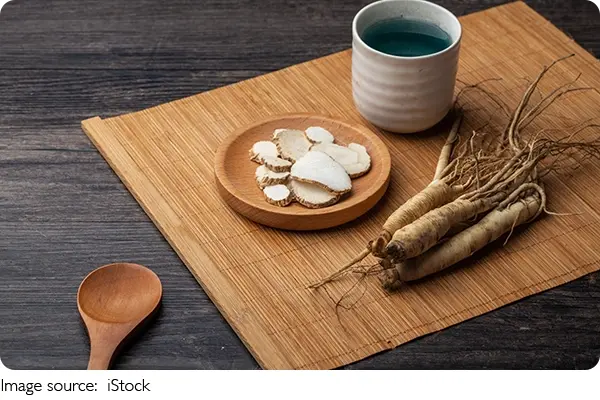
Ginseng offers a multifaceted approach to immune support through its bioactive compounds, particularly ginsenosides and polysaccharides. By enhancing immune cell function, regulating inflammation, reducing oxidative stress, and supporting adaptation to stress, it contributes to a balanced and resilient immune system.