Oil Reality

Pardeep Singh
| 22-04-2026
 · News team
At first glance, vast underground reserves may look limitless—hidden oceans of energy waiting beneath the Earth's surface.
But the idea that oil is infinite is one of the most persistent misconceptions in modern resource thinking. In reality, it is a finite material shaped by geological time, not human demand.
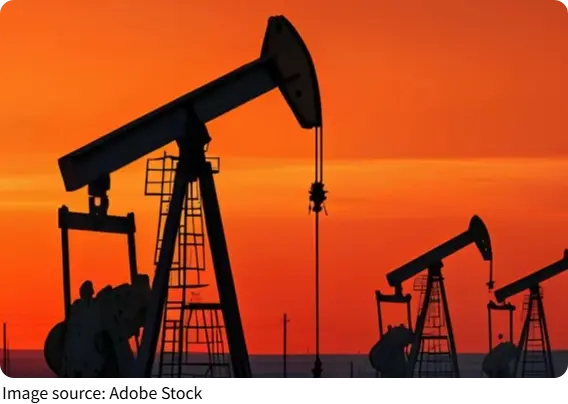
Understanding what oil truly is changes the entire question from “how much exists” to “how long it can sustain us.”
How Oil Actually Forms
Oil is not created quickly. It originates from microscopic marine organisms that lived millions of years ago. After these organisms settled on ancient seabeds, they were gradually buried under layers of sediment.
Over extremely long periods, pressure and heat transformed this organic material into liquid hydrocarbons. This process takes millions of years—far beyond any human timescale.
The Invisible Force Controlling Every Financial Decision You Make
How far can genetic tests go in shaping your health future? New insights are changing views!
How does a single gene keep iron levels balanced? Small changes can impact the whole body!
Can ginseng really support your immune system daily? See what makes it stand out now!
Struggling to see far? Vision testing helps catch myopia before it worsens!
More than just weight? Smart scales track body data for better health insights daily!
Because formation is so slow, oil is effectively non-renewable in practical terms. What we extract today cannot be replaced within a human lifetime or even many civilizations combined.
Why It Feels “Abundant”
Despite its finite nature, oil has often appeared plentiful due to large discoveries and advanced extraction methods.
Several factors contribute to this perception:
1. Large underground reservoirs — Some deposits contain vast quantities in a single location
2. Technological progress — Improved drilling techniques access deeper and harder-to-reach sources
3. Global distribution — Oil exists across many regions, creating a sense of widespread availability
These factors delay scarcity, but they do not eliminate it.
The Reality of Finite Resources
Unlike renewable systems such as sunlight or wind, oil does not regenerate on a usable timescale. Once extracted and consumed, it cannot be naturally replaced in meaningful timeframes.
Extraction also becomes more complex over time. Easily accessible reserves are typically used first, leaving deeper or more challenging sources that require higher energy input and cost.
This creates a gradual shift from “easy energy” to “difficult energy.”
Economic and Environmental Dimensions
Oil is not only a physical resource—it is deeply tied to global systems of transportation, manufacturing, and industry. Its availability influences pricing, infrastructure planning, and economic stability.
At the same time, its use introduces environmental challenges, particularly in terms of emissions and ecological impact during extraction and consumption processes.
These dual aspects make oil both essential and complex in modern development.
How Long Can It Last?
Estimates vary widely depending on consumption rates, discovery of new reserves, and technological improvements. However, no credible scientific model supports the idea of infinite supply.
Instead, most projections suggest a gradual decline in easily accessible reserves, followed by increasing reliance on alternative energy systems.
The key uncertainty is not whether oil will run out, but how smoothly the transition away from dependence can occur.
Alternatives and Transition Trends
As awareness grows, many regions are investing in diversified energy systems.
Common directions include:
1. Solar energy expansion — harnessing direct sunlight for power generation
2. Wind energy development — using atmospheric movement for electricity
3. Efficiency improvements — reducing total energy demand through smarter systems
These approaches do not immediately replace oil, but they gradually reduce dependence.
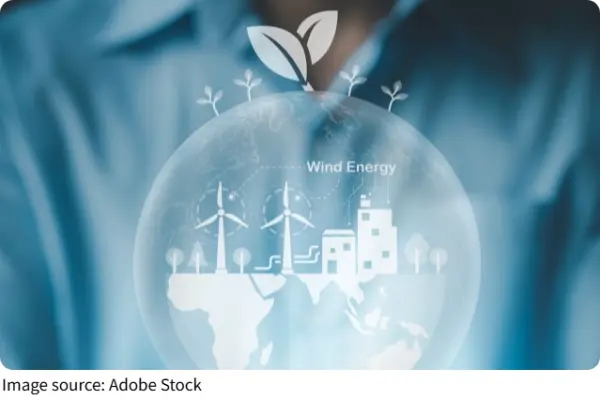
Rethinking “Endless Supply”
The idea of infinite oil comes from a time when reserves seemed vast compared to consumption. Today, with growing demand and clearer geological understanding, the picture is more precise.
Oil is best understood not as endless, but as deeply stored time—energy compressed over millions of years and released within decades.
That imbalance is what makes it powerful, and also what makes it limited.
Conclusion
Oil is not an unlimited gift beneath the Earth, but a finite legacy of ancient biological processes. Its availability depends on geology, technology, and consumption patterns—not infinite regeneration.
Recognizing this helps shift the conversation from assumption to planning: how to use what exists wisely, and how to prepare for a future shaped by a broader mix of energy sources.